Construction Sites Running on Gut Feeling — Why Vietnamese Contractors Lose Money Without Knowing It
In construction, managing dozens of simultaneous variables without AI support means risk is handled by personal instinct — an approach far more costly than any software investment.
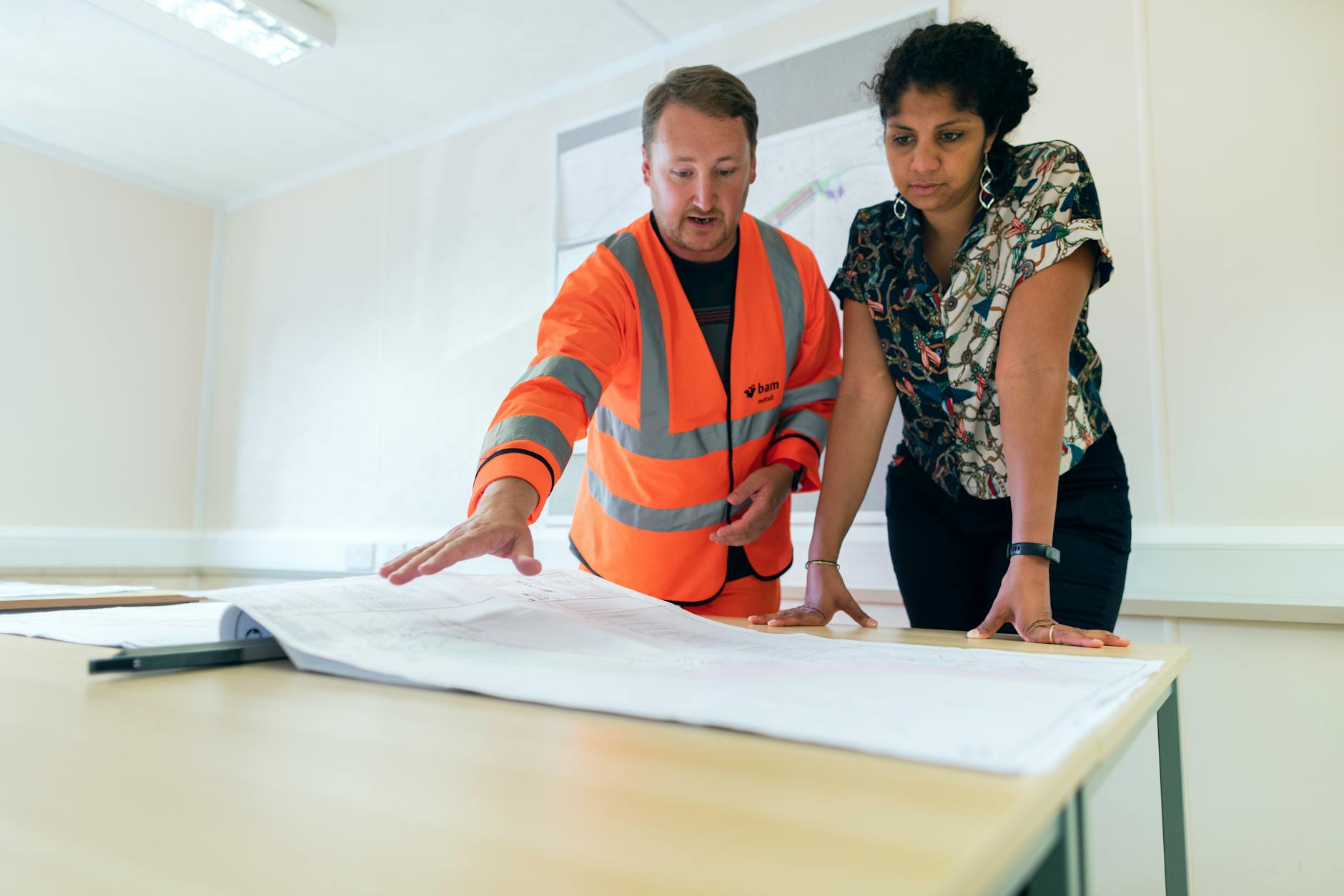
A typical construction project in Vietnam involves hundreds of material line items, dozens of suppliers, hundreds of workers rotating across project phases, and a contract with unforgiving deadline penalty clauses. Yet in many contracting firms today, this entire operation is still coordinated through Excel sheets, Zalo messages, and the memory of a handful of key people. This is not a story about being behind the times — it is a story about systemic risk quietly accumulating day by day. AI is not a technology trend to observe from a distance; for the construction industry, it is a survival tool that needs to be deployed right now.
Forecasting Costs With Data — Not With Gut Feeling
One of the most persistent headaches for contractors is controlling cost overruns. Industry surveys suggest that over 70% of small and mid-sized construction projects in Vietnam exceed their budgets — not due to lack of experience, but due to the absence of timely data processing. When steel prices spike unexpectedly, or when a labor crew suddenly falls short at a critical foundation-pouring phase, the corrective decision often arrives days after the damage has already been done. AI is capable of analyzing historical material pricing, identifying seasonal fluctuation patterns, and issuing alerts before costs cross critical thresholds — something no human mind can do simultaneously across multiple concurrent projects. Integrated management platforms like PowerSofts allow data from field operations, material warehouses, and finance departments to converge into a single stream, giving AI the foundation to generate actionable early warnings rather than after-the-fact reports that come too late.

Managing Construction Labor — From Manual Roll Calls to Workforce Optimization
Given the nature of construction labor — shift-based, package-based, rotating across multiple sites — tracking workforce performance and labor costs is nearly impossible with manual methods alone. A contracting company running three concurrent projects may need to manage over 300 workers under varying piece-rate pay arrangements. Even minor errors in timekeeping or workforce allocation lead to cost overruns or contract disputes. AI applied within HRM systems enables facial recognition check-ins at job sites, automated aggregation of working hours, productivity analysis by crew team, and forecasting of labor demand for each construction phase. Instead of a foreman manually reporting at end of day, the system self-updates and flags anomalies so decision-makers can intervene at exactly the right moment.
Project Progress No Longer a Black Box for Leadership
One of the most common complaints from project owners when working with Vietnamese contractors is a lack of transparency about actual progress. Progress reports are typically prepared weekly, but on-site conditions can shift daily. AI combined with IoT sensors and drone imagery enables real-time construction progress monitoring, automatic comparison against the planned baseline, and alerts whenever a deadline risk emerges. More importantly, AI can simulate scenarios: if one work package is delayed by seven days, how does that cascade across all dependent activities, and which adjustment option is most cost-efficient? This type of analysis previously required large construction conglomerates with dedicated planning engineers. Today, with an AI-integrated ERP platform like PowerSofts, that capability is accessible even to mid-sized contractors.
The construction industry operates in an environment of high volatility, thin margins, and relentless schedule pressure. That is precisely the environment where AI creates its most tangible value — not by replacing the experience of business leaders, but by equipping them with information fast enough and accurate enough to make the right decisions before the cost of delay becomes irreversible. Construction companies that adopt AI today are not simply investing in technology — they are investing in the capacity to survive and grow sustainably in an increasingly competitive industry.